|  |  |  | | | | | Elections - Google News | | | | | | | | | | | | | | | | | | | MANCHESTER, N.H. – Mitt Romney came to a polling place near the center of town this morning, and was mobbed by supporters, members of the media, and a few protesters, as voters tried to fight through to cast their ballots. Getting off his campaign bus – and joined by his wife, Ann, youngest son, Craig, and his wife, Mary – Romney said he felt "terrific" as he walked through a barricade shaking a few hands along the way. The scene was mostly made for media, the only public event Romney had today before his campaign party tonight at the Southern University of New Hampshire. "Oh, I hope we do well," Romney said. "I note that if we get double the number of vote margins that we had in Iowa, I'd feel terrific." Continue reading below "It's very exciting," he added. "Great weather. I hope the people of New Hampshire turn out. The entire nation is watching." Newt Gingrich had come earlier to the same polling spot at Webster School. Jon Huntsman would follow. The crowd outside was boisterous, shouting, "Go, Mitt, Go!" and "Send Obama home!" At one point, according to those who heard it, someone shouted as Romney held a baby, "Are you going to fire that baby?" The line was a reference to comment Romney made yesterday, in reference to being able to fire insurance companies, "I like being able to fire people who provide services to me." As Romney made his way to a black suburban, he was surrounded by cameramen and reporters. Eventually he and his family got in, and the car drove away, not more than 10 minutes after he had arrived. Try BostonGlobe.com today and get two weeks FREE.Matt Viser can be reached at maviser@globe.com. | | | | | | | | | | | | | | | | | | | | | | | | | President Obama's campaign tweaked the Republican field Tuesday by buying the banner ads on the Website of New Hampshire's largest newspaper — a must-check site for primary junkies. "New Hampshire Primary Results: THE TEA PARTY AGENDA WINS!" the ad reads one of the ads across the top of the Union Leader's online portal, carefully noting the banner was paid for by "Obama For America." A second ad along the right side of the screen features a big picture of the President. Obama's camp pulled a similar trick last week in the Des Moines Register during the GOP's Iowa caucuses. "Something like this is booked several months in advance, on a first-come, first-served basis," said the Union Leader's national ad account s manager Charlotte Ingalls. "It's an exclusive ad for that one day - we call it a 'homepage takeover'" she said. The homepage takeover only cost $1,000 when it was ordered months ago - paid in full by Team Obama. The campaign of Republican front-runner Mitt Romney bought the same ad space on Jan. 3, 6 and 9. "But they didn't get THE day," chortled a Democratic operative not affiliated with the Obama re-election. "Not the seamless campaign move the Romney camp tries for." "I guess we should have seen it coming," lamented one Republican organizer, who grudgingly gave the Obama camp props for making a Democratic splash amid a GOP event. Obama's Union Leader ads also features a red "Fight Back" button that swiftly routes readers to the Obama 2012 campaign site. "The Republican presidential candidates have made their plans clear: they're fighting for big corporations and millionaires. Only Barack Obama is fighting for the middle class. Join the movement now," the campaign Website asks. That message was a bit much for Republicans. "For Obama - with his bank bail outs and bizillion dollar re-election fund to say he is for the little guy, please!" the same GOPer said. Calls to the Obama campaign were not immediately returned. But at least one Obama official clearly relished the win, according to Politico's Playbook. "Chicago tales over the Union Leader Website — with all eyes on the GOP in New Hampshire, the Obama campaign has quietly stuck its thumb in the eye of the Republican field," the official told Politico. | | | | | | | | | | | | | | | | | | | | | | | | | CONCORD, N.H. — New Hampshire voters began casting their ballots at schools and churches Tuesday in the nation's first presidential primary as former House Speaker Newt Gingrich kept up his attacks on the record of former Massachusetts Gov. Mitt Romney, the Republican front-runner. "I think the contrast with Romney that will matter is the contrast with his record as governor," Mr. Gingrich told reporters outside a polling station in Manchester. He has criticized Mr. Romney as a timid liberal, as well as blasting Mr. Romney's performance as a venture capitalist as CEO of Bain Capital. Mr. Romney still held a double-digit lead in polls Tuesday as voting began. He is hoping a victory in New Hampshire will give him momentum heading into South Carolina's primary on Jan. 21, where he faces a tougher slog. In a New Hampshire tradition, nine registered voters in tiny Dixville Notch cast their ballots at midnight. The top vote-getters on the GOP side were Mr. Romney and former Utah Gov. Jon Huntsman Jr., both of whom received two votes. Mr. Gingrich and Texas Rep. Ron Paul each garnered one vote. President Obama, who is running unopposed on the Democratic ticket, received three votes. At the Webster School polling place in Manchester, a massive media horde engulfed Mr. Huntsman as he arrived with his wife around noon. Police, including two atop black horses, worked to control the situation. Mr. Huntsman shook hands with potential supporters while Romney supporters chanted, "Go, Mitt, go!" and called out, "Who's Obama's boy? Jonny!" — a shot at Mr. Huntsman's service as ambassador to China in the Obama administration. On his way in to cast his vote, Pat Austin, 28, of Manchester, said he was supporting Mr. Romney for the second time in as many Republican presidential primaries. "I kind view myself as more as a moderate than a conservative," Mr. Austin said. He added that some Republicans have gone too far to the right on social issues and that some of Mr. Romney's rivals are leveling disingenuous attacks against him. He said of Mr. Romney's time at Bain Capital, "That's what you're supposed to do, is make businesses more profitable." Bruce Perreaul, 62, of Manchester also supported Mr. Romney in 2008 and again Tuesday. Mr. Perreaul said the other candidates didn't compare because the "number one issue is we've got to beat Obama." "I think he's the best candidate," Mr. Perreaul said. "I think he is going to beat Barack Obama. He combines political experience with free enterprise experience." Dan Ellingwood said that he voted for Mr. Huntsman and that Mr. Romney was "too polished." "He comes across as being bought and too rehearsed," the 64-year-old Mr. Ellingwood said. Mr. Huntsman, he argued, is someone he can "trust." Mike McCarthy supported Ron Paul. "I like all his views on getting back to the Constitution," Mr. McCarthy said. "I'm a big Second Amendment rights activist." Mr. McCarthy also said that he'll be happy when the primary is over. Story Continues → View Entire Story© Copyright 2012 The Washington Times, LLC. Click here for reprint permission. | | | | | | | | | | | | | | | | | | | | | | | | | "Nothing good can come from the Federal Reserve. It is the biggest taxer of them all. Diluting the value of the dollar by increasing its supply is a vicious, sinister tax on the poor and middle class." — Ron Paul, End the Fed You know Dr. Paul as the only clearheaded guy now running for president. Which is why the mainstream media calls him insane. Ron Paul tells the emperor that he is wandering around naked and gets lambasted by the mainstream (both Left and Right) because of it. Paul would like you to know that the Fed is responsible for the ongoing and everlasting economic crisis we are living through. The Fed has a long history of bad policies that supply cheap credit to insiders and of printing money that destroys the value of the dollar. 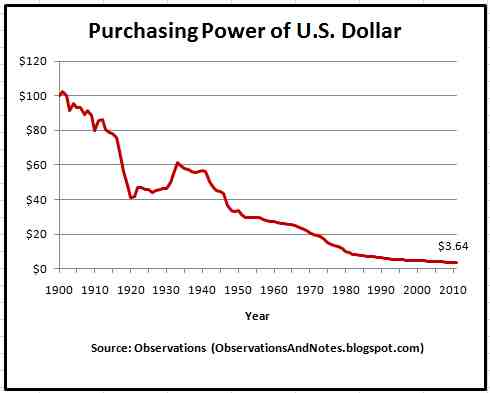
"Prosperity can never be achieved by cheap credit," Paul explains. "If that were so, no one would have to work for a living. Inflated prices only deceive one into believing that real wealth has been created." In his book, End the Fed, Paul goes on to say: "The worse the economy gets, the more power Congress is willing to grant to the Federal Reserve. Trillions of dollars created and distributed by the Fed with no requirement to submit to any oversight." Stay on top of the hottest investment ideas before they hit Wall Street. Sign up for the Wealth Daily newsletter below. You'll also get our free report, Why Invest in Gold by our resident gold expert, Greg McCoach. We Are All Austrians Now In a recent stump speech, Paul declared: "We are all Austrians now." Of course, there was little coverage of what he meant by that other than a sad, wistful shaking of the head by the Botoxed anchors on TV. The vast hordes of dufus-Americanus couldn't — or wouldn't — understand... The Austrians believe stimulus and government intervention of the type we've seen for the past fifteen years allocates funds to where they aren't needed, and allows those who created the crisis (read: those who failed) to live on as zombie banks and car companies. These colossi of failure are connected to insiders, get special deals, limit competition, reduce growth, and live to fail another day. This is what has been going on in Japan since 1990. Money likes to go where it is treated best. And since the Fed was created in 1913, it has wanted to leave the U.S. dollar. Paul writes: The Fed is using all its power to drive the monetary base to unprecedented heights, creating trillions in new money out of thin air. From April 2008 to April 2009, the adjusted monetary base shot up from $856 billion to an unbelievable $1.749 trillion. Was there any new wealth created? New production? No, this was the Ben Bernanke printing press at work. If you and I did anything similar, we would be called counterfeiters and be sent away for a lifetime in prison. But, when the Fed does it — complete with a scientific gloss — it is seen as the perfectly legal and responsible conduct of monetary policy... Manipulating the money supply and interest rates rejects all the principles of the free market, and so it cannot be said that too free a market caused this mess. The market was not free at all. It was manipulated and distorted. On the inflation front, Paul adds: It's as if we still believe that money can be grown on trees, and we don't stop to realize that if it did grow on trees, it would take on the value of leaves in the fall, to be either mulched or bagged and put in a landfill. That is to say, it would be worthless... When we unplug the Fed, the dollar will stop its long depreciating trend, international currency values will stop fluctuating wildly, banking will no longer be a dice game, and financial power will cease to gravitate toward a small circle of government-connected insiders. Well said. Paul's Investments Ron Paul is the type of guy who buys his own order book. According to a Wall Street Journal report last month: The presidential candidate has 64% of his portfolio allocated to gold and silver commodity-related investments. What's more, he has no love lost for bonds (0% of his portfolio) and a dismal outlook on the stock market. Only .1% of Representative Paul's portfolio is allocated to stock funds, and all of those funds are bearish — inversely correlated to the performance of the market. Among the 26 gold and silver mining companies held by Rep. Paul are large companies — Barrick Gold, Goldcorp and Newmont Mining — as well as a slate of small-cap miners. His non-mining portfolio holdings also include 14% cash and 21% real estate investments. Paul's portfolio is worth something roughly between $2.5 and $5.5 million. If you believe in gold, ending big government, and personal responsibility... All the best, 
Christian DeHaemer  @TheDailyHammer on Twitter @TheDailyHammer on Twitter
Since 1995, Christian DeHaemer has specialized in frontier market opportunities. He has traveled extensively and invested in places as varied as Cuba, Mongolia, and Kenya. Chris believes the best way to make money is to get there first with the most. Christian is the founder of Crisis & Opportunity and Managing Director of Wealth Daily. He is also a contributor for Energy & Capital. For more on Christian, see his editor's page.
| | | | | | | | | | | | | | | | | | | | | | | | | Reporting from Manchester, N.H. --— No matter what happens in the New Hampshire primary today, Mitt Romney should be grateful that his opponents didn't force him to play the expectations game.All available evidence suggests that Romney, with twice the support of his nearest rival in the latest polls, will roll to a solid victory. But a candidate can win and still fall short of expectations, dampening enthusiasm and giving rival campaigns encouraging for the next round of voting. That's why raising the bar for an opponent is a time-honored tactic in politics. This time, though, there's been little trash talk from Romney's rivals about how well the front-runner "must" do. It's an easy case to make ("This is a home game for Mitt. He owns a house here. He governed next-door in Massachusetts. He's been running here for the last five years."). That (un)said, it's worth taking a look at what Romney is up against, historically, and what the expectations might be, realistically, for his performance today. The Republican record for a contested New Hampshire primary belongs, appropriately enough, to Ronald Reagan. In 1980, he won by 27 percentage points (over George H. W. Bush) and took half the primary vote. If Romney does that well, it would be hard to diminish his accomplishment. Next best was John McCain's 18-point win over Bush's son, W., in the 2000 primary. (Four years ago, McCain beat Romney by five points.) Third best was President George H. W. Bush's 16-point margin over Pat Buchanan in 1992. Heading into today's primary, Romney held a 20-point lead over his nearest competitor, Ron Paul, according to the latest RealClearPolitics average of New Hampshire polls. If Romney maintains that 20-point edge, he will have met expectations. But reporting in New Hampshire over the last few days suggests that those poll numbers may well be a lagging indicator of voter sentiment (polls often are) and that Romney won't achieve that landslide level when the votes are counted. Still, if he winds up at least 15 percentage points ahead of whomever is second (Paul or Jon Huntsman, in all likelihood), it will be hard to fault him. A win closer to 10 points than 15, though, will again raise questions about the intensity of Romney's support. If he blows more than half his lead and wins by less than 10 points, his victory will be tarnished by fresh doubts about his skills as a campaigner and ability to give Barack Obama a run for his money in the fall. There will also be renewed attention to the GOP frontrunner's apparent weakness for unforced errors, like the one in Nashua, N.H. on the morning before the primary ("I like being able to fire people who provide services to me," said the man whose record of laying off workers is already a big campaign issue). And were Romney to actually lose the New Hampshire primary? Well, nobody expects that. paul.west@latimes.com | | | | | | | | | | | | | | | | | | | | | | | | | Jon Hunstman's campaign will challenge the Arizona secretary of state's office after he failed to qualify for the state's presidential primary.
A spokesman for Secretary of State Ken Bennett said that the former Utah governor filed paperwork a few hours before Monday's 5 p.m. deadline, but that it was missing a notarized signature from the candidate.
Huntsman spokesman Tim Miller said the campaign will aggressively pursue an appeal.
"We completed the required paperwork and are challenging the ruling. We will be on the ballot," Miller said.
Arizona's presidential preference primary is scheduled for Feb. 28. President Obama will face no opposition in the Democratic contest on the same day.
Major GOP candidates Rick Santorum, Newt Gingrich, Mitt Romney, Rick Perry and Ron Paul made the ballot, as did 24 other people. | | | | | | | | | | | | | | | | | | | | | | | | | 
U.S. Secretary of State Hillary Clinton greets in the traditional Thai way as she visits the collective centre for people evacuated from flooded areas in Bangkok November 17, 2011. (DAMIR SAGOLJ - REUTERS) LITTLE ROCK, Ark. -- Is Vice President Hillary Clinton a Clintonite fantasy or a valid possibility? Even Monday's announcement of White House Chief of Staff Bill Daley's resignation boosted the hopes of Hillary supporters who chose to see it as a harbinger: Could more shake-ups occur in the Obama administration before November? Say, a switch of Joe Biden for Hillary Clinton? With everyone from Bill Keller of the New York Times to novelist Anne Rice jumping on the bandwagon, at least one of the Clintons couldn't be happier. ("Hillary Clinton for vice president now!'' Rice wrote on her Facebook page. "Strengthen the ticket and prepare for the future! What a spokesperson she would be for the administration in the coming campaign months! Let's hear it for Hillary!") Some of Bill Clinton's closest friends and allies here say the entire scenario is the former president's wishful thinking, and that his not-so-secret fantasy is that his wife could make history as the country's first female vice president; apparently, he pushes the idea to anyone who will listen. Other Clinton friends, however, say both Bill and Hillary Clinton think the Democratic Party needs a jolt only she can deliver. At this point, even I don't know which wing of the family is right; the Clintons and their allies have been spinning yarns and leaking rumors for decades, daring reporters to decipher them. And I've been covering Bill Clinton literally since childhood. When I was eight, my third grade class ventured to the Arkansas state capitol on a field trip. We accidentally met Bill Clinton, then a newly elected governor, who greeted us in the capitol's rotunda. One of my friends immediately fell in love with him. She taped pictures of him on her bedroom wall as if he were a rock star. The teacher assigned us a report to write about our meeting. I'm unsure what I said, but he was a nice enough guy, shook our little hands and answered questions. He was my first connection to the political world. In high school, then-Governor Bill Clinton often spoke at the state's high school journalism convention. Inevitably, we would write a small story about what he said. Those printed jewels now lie in some dusty library archive, but Clinton was always an inspirational figure, urging us to follow our dreams. Once, he invited college newspaper editors to the state capitol for one-on-one interviews. As a sophomore, I walked into the imposing governor's conference room with its long wooden table, grasping my now-archaic gigantic tape recorder, and asked him about his higher education plan for Arkansas. By 1990, as I stood on a sidewalk in a small Arkansas town watching a parade, Bill Clinton crossed the street to greet me and called me by name. Pro politician that he is, he shook my hand, met my parents and mentioned our interview the previous year. When he became president, I covered scandals and impeachment, then the construction of his presidential library and his life after the presidency. Along the journey, I've seen the Clinton machine regularly drops clues about the future. They leak to reporters via phone calls. They float rumors over glasses of wine. Then they deny everything once it's printed. It's their modus operandi. The vice-president rumor has been white-hot for several months in Arkansas. On their home turf, the gossip hit fever pitch in early October, when Hillary made a rare appearance here. Hillary – along with Bill and their daughter Chelsea – celebrated the 20th year anniversary of Bill Clinton's announcement for president. The three walked hand-in-hand across a newly dedicated bridge, leading to the William J. Clinton Presidential Center near the Arkansas River, and acted like the first family we remember from the 1990s. At a packed lecture, Hillary talked about her work as Secretary of State. She waved to the crowds that gathered on the grounds of the historic Old State House Museum, the site of Bill Clinton's 1991 presidential announcement. She sure didn't act like a baby boomer longing to retire to Chappaqua and write a new volume of memoirs. Long-time supporters whispered that she was open to joining the 2012 ticket with Obama, a president who isn't at all popular in this Southern state. In December, when Bill Clinton visited Arkansas for a book signing, many supporters told him they wanted Hillary on the 2012 ticket – and he certainly didn't quash the possibility, even, or perhaps especially, with reporters listening. (On that occasion, I was informed in advance that Clinton had requested that I ask the first question at the news conference. It didn't happen that way, because another reporter jumped the line. But that's OK; I'm too young to become the Helen Thomas of the Little Rock press corps.) So having covered Bill Clinton for most of my life, what's my bet? The current vice-presidential rumors aren't being floated for naught. Hillary may not land on the ticket, but Clintonites certainly want Obama to strongly consider it. Suzi Parker is an Arkansas-based political and cultural journalist and author of "Sex in the South: Unbuckling the Bible Belt." Follow her on Twitter at @SuziParker | | | | | | | | | | | | | | | | | | | | | | | | | January 10, 2012, 10:38 AM EST By Tom Schoenberg (Updates with Virginia's notice of appeal in third paragraph.) Jan. 10 (Bloomberg) -- Virginia officials, sued by presidential hopeful Rick Perry, were ordered to refrain from mailing absentee ballots or printing regular ones for the state's Republican primary pending a Jan. 13 hearing. U.S. District Judge John A. Gibney Jr. in Richmond yesterday said the process must be halted while he considers the suit by the Texas governor and other Republican presidential candidates, who were disqualified from the state's primary because they didn't submit 10,000 signatures from qualified Virginia voters. Virginia Attorney General Kenneth Cuccinelli filed a notice of appeal today seeking to overturn Gibney's order immediately. E. Duncan Getchell Jr., Virginia solicitor general, said during a Dec. 29 hearing that primary ballots needed to go to the printer by yesterday to meet the legal deadlines to provide ballots to absentee and overseas voters. "We have complied with the order and we are seeking an emergency review by the Fourth Circuit," Brian Gottstein, Cuccinelli's spokesman, said in an e-mail yesterday. Perry last month sought a temporary order to halt state officials from printing the ballots, or to require them to include his name. In a lawsuit filed Dec. 27 in federal court in Richmond, Perry claimed the state's requirement that people who circulate petitions be eligible or registered to vote in Virginia violates his constitutional rights. Santorum, Gingrich Last week, Republican presidential candidates Rick Santorum, Newt Gingrich and Jon Huntsman won permission to join Perry's challenge. They argued that Virginia's rules governing petition circulators violate "freedoms of speech and association protected by the First and Fourteenth Amendments" of the U.S. Constitution. In yesterday's order, Gibney said he will rule on Perry's request for a preliminary injunction the same day as the Jan. 13 hearing. "This is a positive development for the presidential candidates and the citizens of Virginia," Ray Sullivan, a spokesman for the Perry campaign, said in an e-mail. Cuccinelli said Perry was disqualified from the March 6 election because he failed to collect the 10,000 signatures required by state rules. 'Lacks Standing' Perry "lacks standing to assert an injury arising from the inability to circulate his own petitions because there is no averment that he stood ready, willing and able to circulate his own petitions and there is no basis for concluding that he would have collected a sufficient number of valid signatures," the state said in its filing. Former Massachusetts Governor Mitt Romney and U.S. Representative Ron Paul of Texas are the only Republicans to make it onto the ballot for Virginia's primary on so-called Super Tuesday, the Republican Party of Virginia said last month. The case is Perry v. Judd, 3:11-cv-00856, U.S. District Court, Eastern District of Virginia (Richmond). --Editors: Fred Strasser, Michael Hytha To contact the reporter on this story: Tom Schoenberg in Washington at tschoenberg@bloomberg.net. To contact the editor responsible for this story: Michael Hytha at mhytha@bloomberg.net | | | | | | | | | | | | | | | | | | | | | | | | | After previously dismissing it publicly, groups supporting several GOP presidential hopefuls are revealing that they considered buying the upcoming attack documentary about Mitt Romney's days at Bain Capital, a film that a Gingrich super PAC eventually bought for $40,000. GOP adman Fred Davis said he presented the film to a pro-Huntsman super PAC after seeing the trailer, but it was too late to consider buying it, and the film's producer said the Huntsman PAC couldn't afford it. Politico theorizes that the sudden talk about considering the film suggests Romney's rivals collectively see it as the best way to slow his snowballing campaign. | | | | | | | | | | | | | | | | | | | | | | | | | The forecast for Tuesday's Republican primary in New Hampshire calls for mostly clear skies and temperatures in the low 40s, but that likely won't deter Granite State Republican voters from casting their ballots.
Weather can play a deciding factor in key races in some states, and GOP voters, in general, are a bit more motivated to make it to the polls than Democrats.
NEWS: How Politicians Dodge Questions
"Registered Republicans will come out and vote regardless of the weather," said Andrew Smith, associate professor of political science and director of the University of New Hampshire Survey Center.. "They are going to vote because it's a Republican primary, they're excited about their candidate, and it's the first vote against (President) Obama.
Smith said cold or snowy weather could keep more moderate, independent or Democratic voters at home. New Hampshire has an open primary, which means that anyone can vote regardless of party registration. That could also hurt a moderate GOP candidate such as Jon Huntsman.
While New Hampshire GOP voters may be hardier than most, experts say that weather can swing elections by suppressing or boosting turnout in pivotal states. Take the infamous Florida 2000 general election. Heavy rainfall in the Pensacola area kept many Democratic voters at home, according to Brad Gomez, associate professor of political science at Florida State University.
Gomez said that his predictions showed that if it had not rained that day, Democrat Al Gore would have won 2,000 more votes, which would have given him the state of Florida, and the 2000 election.
"Florida was so close," said Gomez, who published a study on weather and voter turnout in a 2007 in the Journal of American Politics. "The bias is that when turnout gets depressed by weather, it tends to suppress peripheral voters who are sitting on the fence," Gomez said. "Those voters tend to be Democrat. Some of it is socio-economic, and that it is harder to meet cost of voting. For example, some voters may feel 'not only do I have to take the bus, but take the bus and stand in the rain. It's not worth it anymore.' "
NEWS: E-Voting Gets Closer in 2012
Gomez's study looked at 14 general elections and examined meteorological data from 22,000 U.S. weather stations. He and his colleagues found that rain of at least one inch pushed down voter turnout by 1 percent, while a inch of snow reduced turnout by half a percent.
That may not seem like much, a close general election usually turns on just a handful of counties in a handful of states.Gomez cited the 1960 general election between Richard Nixon and John Kennedy. Illinois voters woke up to remarkably clear weather and voted in high numbers. Had normal levels of rainfall occurred, Nixon would have won the state and become president.
While weather can make small shifts in voter turnout, Gomez says that a growing trend of early-voting -- now offered in 32 states and the District of Columbia -- may lessen its impact. Still, Gomez said, "in a close race, turnout matters."
And, apparently, so does the weather. | | | | | | | | | | | | | | | | | | | | | | | | | It was a long-held fear of Wall Street's private equity titans. If Mitt Romney won the Republican nomination in 2012, the industry would come under intense scrutiny and withering attacks from his opponents. As Mr. Romney has established himself as the front-runner in the large Republican field, those fears have come to fruition. And the private equity titans are fighting back. The industry's lobbying group has hatched plans to counter the intensifying criticism of private equity's business practices. In the coming weeks, the group, the Private Equity Growth Capital Council, will roll out an image campaign, according to two people with direct knowledge of the plans who requested anonymity because they were unauthorized to discuss them publicly. Initiatives includes online advertising that will promote the industry as one that creates jobs and grows companies. The council plans to reach out to political reporters and columnists in an attempt to disabuse them of what it sees as gross misconceptions about private equity. It will also hire more people in the coming months, adding to its lean 10-person staff. "There is a lot of misinformation being spread, purely for political purposes and on both sides of the aisle, as it pertains to private equity," Steve Judge, the group's interim president and chief executive officer, said in a statement issued on Monday. "While the business model has evolved over time, the fact of the matter is private equity provides capital and operational expertise to companies that are often underperforming or on the brink of failure." Those comments were in direct response to the stepped-up attacks against Mr. Romney's business record over the weekend. Newt Gingrich said that Bain Capital, the firm Mr. Romney ran, looted companies and left people unemployed. "When Mitt Romney Came to Town," a soon-to-be released film backed by Mr. Gingrich's political action committee, focuses on four soured Bain deals, including one where it laid off a hundred steel workers in South Carolina. A number of investigative articles in the media have also raised questions about Bain's investment record while Mr. Romney ran the firm. This is hardly the first time that the industry has come under assault. In early 2007, the world's largest firms, including Bain Capital, formed the private equity trade group at the peak of the buyout boom. Within months, the industry became a symbol of corporate greed and excess, in part a result of the lucrative initial public offering of Blackstone Group and a fin de siècle 60th birthday party thrown by its chief executive, Stephen A. Schwarzman. Congress, as it began to explore ways to cut the deficit, also homed in on what it saw as tax advantages enjoyed by Mr. Schwarzman and his private equity peers. The trade group, originally called the Private Equity Council, fought back on tax reform, and has continued to lobby aggressively against it. It has so far succeeded in batting back a tax hike on private equity executives, though Congress is expected to again raise the issue this year. One of the council's goals has always been to rebut what it sees as negative stereotypes about private equity, promoting an image of private equity as job creators who fix and grow companies. It publishes studies and white papers such as "Driving Growth: How Private Equity Investments Strengthen American Companies." On its website it seeks to disprove various "fictions." For example: "Fiction: Private equity firms are 'quick flip' artists that buy companies and sell them to make a fast buck." It then tries to debunk the statement: "It takes time to grow and strengthen companies so that they are worth more to future buyers." The council has evolved in recent years. Originally a group of the 11 largest buyout shops, like Carlyle Group and Blackstone, it expanded its membership ranks in 2010 and changed its name to the Private Equity Growth Capital Council. The council's rebranding, and its recruitment of smaller firms, was an attempt to promote the industry as doing more than just classic private equity transactions — the risky leverage buyouts that borrow large amounts of debt to buy big companies and sometimes end up in bankruptcy. But the council has had growing pains. Its first chief executive, Douglas Lowenstein, resigned last summer and it has not yet found a permanent replacement. Last year, Mr. Romney's former firm, Bain Capital, dropped out of the council. Bain's partners decided to leave because of dissatisfaction with the group's direction and felt that its annual dues of nearly $1 million per year could be better spent elsewhere, according to a person with direct knowledge of the firm's thinking. Mr. Romney's candidacy, combined with Bain's withdrawal, have complicated the council's lobbying and advocacy efforts, said two people with direct knowledge of its work. Most of the recent criticism of the industry has been Bain-focused, but the council has resisted directly refuting those attacks. It wants to remain non-partisan and not appear in any way to be supporting Mr. Romney's candidacy. A number of the country's top private executives — Blackstone's Hamiton E. James and TPG's David Bonderman, for example — are big Democratic donors. The private-equity-is-evil narrative first emerged during the 1980s, when buyout executives began using large amounts of debt to buy companies. They were branded as "barbarians at the gate," which was the title of a 1990 book about the takeover of RJR Nabisco by Kohlberg Kravis Roberts. A year before, in 1990, The Wall Street Journal published a Pulitzer Prize-winning article by Susan Faludi about the human toll of K.K.R.'s leveraged buyout of the grocery chain Safeway. The article opened with a laid-off Safeway truck driver shooting himself in the head. In 1994, Mr. Romney learned firsthand the power of a negative attack on private equity. That year, he launched his political career by running for the senate and challenging Senator Edward M. Kennedy. He promoted his record of job creation and building businesses at Bain. Mr. Kennedy turned the tables on Mr. Romney by focusing on American Pad & Paper, or Ampad, a company that, under Bain's ownership, shed factory jobs and cut wages. The Massachusetts senator played television ads featuring laid-off Ampad employees, even though those layoffs occurred after Mr. Romney left Bain. Mr. Romney later acknowledged that he was unprepared for Mr. Kennedy's private equity assault. "He characterized me as a cold-hearted, unfeeling robber baron," said Mr. Romney at the time, in an interview with The Boston Globe. With Mr. Romney in the spotlight on a national stage and facing a well-funded Obama reelection campaign, the industry's top officials know that Mr. Romney's opponents will continue to push the portrayal of Mr. Romney as a fat-cat job-destroying deal maker. "We were bracing ourselves for this but we're not even in the general election yet," said a senior private equity executive who spoke only on the condition of anonymity. "Expect more pain." | | | | | | | | | | | | | | | | | | | | | | | | |  We're going to go out on a limb and project President Barack Obama as the winner of today's New Hampshire Democratic primary. We're going to go out on a limb and project President Barack Obama as the winner of today's New Hampshire Democratic primary.
So Obama, who has no opposition to speak of among the Democrats, is keeping an eye on the Republicans instead. At a fundraiser last night in Washington, Obama said "everything we fought for during the last election is at stake in this election," a list that could range from the health care law to new Wall Street rules. "Don't take my word for it," Obama said. "Watch some of these debates that have been going on up in New Hampshire." Obama constantly linked "the Republicans in Congress" with "the candidates who are running for president" on a variety of issues, such as the federal debt. "They say they want to reduce the deficit," Obama said for example. "But they're going to do it by gutting our investments in education and research and technology, and infrastructure -- our roads and our bridges and our airports." Obama did say "the good news" is that Americans still have "a common purpose." "Maybe it doesn't exist here in Washington and maybe not on the presidential debate stage up in New Hampshire," Obama said. "But out in America, it's there." | | | | | | | | | | | | | | | | | | | | | | | | Mitt Romney fought to keep an upper hand in the Republican presidential race on Tuesday as his rivals sought to slow his march to the nomination and raise doubts about his electability by branding him as a job-killing corporate villain. As New Hampshire voters began casting ballots in the nation's first primary, Mr. Romney found himself on the unfamiliar terrain of defending his business pedigree against fellow Republicans as his challengers tried to tap into a populist sentiment. He played into the criticism with a handful of missteps, with rivals jumping on him for having suggested that he, too, has feared getting "a pink slip." The attacks were so piercing that some leading Republicans urged the candidates to back off, saying they were only helping validate the argument that President Obama's re-election team has signaled would be central to its case against Mr. Romney if he becomes the nominee. "If somebody's going to crumble, they better crumble before the nomination," said Newt Gingrich, accusing Mr. Romney of "looting" companies at his investment firm, Bain Capital. He added, "Is capitalism really about the ability of a handful of rich people to manipulate the lives of thousands of other people and walk off with the money?" Mr. Gingrich, who is fighting to keep his presidential aspirations alive, brazenly called on his benefactors to "counterbalance Romney's millionaires" and donate money to a group backing him that has opened a blistering $3.4 million advertising barrage against Mr. Romney in South Carolina. A pro-Romney group responded by announcing a $2.3 million campaign of its own. A heated Republican debate over the ethics of aggressive business tactics — and the broader implication that Mr. Romney was out of touch with the lives of ordinary people — seemed incongruous for a party that is traditionally unapologetic about its embrace of corporate wealth creation. A daylong series of exchanges underscored the urgency facing the Republican hopefuls who are fighting for an edge when the race moves beyond New Hampshire. Mr. Romney, whose standing in the state has slipped in recent days, anticipated the disparagement and is trying to put a human face on the private equity business to push back against being portrayed as a greedy titan who saw his own wealth rise as companies that Bain acquired laid off workers and closed factories. Mr. Romney, who went into business after receiving law and business degrees from Harvard and grew up as the son of the chairman of American Motors, seemed to acknowledge that he still needed to do more to connect with voters. "For me, this is going to be a battle about describing my heart, my passion to help, if you will, the great majority of Americans," Mr. Romney said. He worked to brush aside the criticism of Bain, adding: "I thought it was going to come from the president, from the Democrats, from the left, but instead it's coming from Speaker Gingrich and apparently others." On the eve of the New Hampshire primary, his Republican challengers were ready to pounce on any opening. When Mr. Romney argued that consumers should have more choices in how they get their health insurance, he said: "It also means that if you don't like what they do, you can fire them." He added, "I like being able to fire people who provide services to me." Former Gov. Jon M. Huntsman Jr. of Utah seized on the remark barely an hour later, telling reporters at a rally in Concord, "Governor Romney enjoys firing people; I enjoy creating jobs." He added, "It may be that he's slightly out of touch with the economic reality playing out in America right now." The campaign of Gov. Rick Perry of Texas briefly invited visitors to its Web site to download Mr. Romney's comments about liking "to fire people" as a ring tone. Mr. Perry poked fun at Mr. Romney's weekend comments that he knew what it was like to fear a "pink slip" from a lost job. As he sought to salvage his candidacy in South Carolina, Mr. Perry told voters that Mr. Romney's firm had shut down a plant and fired 150 workers in the nearby town of Gaffney. "I have no doubt Mitt Romney was worried about pink slips," Mr. Perry said, adding, "I'm sure he was worried that he would run out of pink slips." Representative Ron Paul of Texas also made a cameo in the wealth distribution debate, using terms that one might be more likely to hear at an Occupy Wall Street rally. He did not mention Mr. Romney by name, but declared at a stop in Hollis: "The wealth is taken from the middle class and it goes to the select few, who are the insiders." But it was Mr. Gingrich who led the charge, smiling and seeming to taunt his rival, saying: "We'll see if he has broad shoulders and can stand the heat." Former Senator Rick Santorum of Pennsylvania, who is trying to emerge as the leading conservative alternative to Mr. Romney, said Monday that he would not participate in what he portrayed as attacks on free enterprise. "I'm not making it a liability," Mr. Santorum told reporters in Derry. "I believe in the private sector." Rush Limbaugh, the conservative radio host, who has not been shy about expressing disagreement with Mr. Romney, came to his aid on Monday and said the language of Mr. Gingrich was "out of bounds for those who value the free market." The chairman of the Club for Growth, Chris Chocola, called Mr. Gingrich's comments "disgusting." Democratic strategists were gleeful that Mr. Romney's fellow Republicans were picking up the attack they have long been planning to make, which they hope will undermine the central rationale of Mr. Romney's candidacy, that he alone has experience as a job creator. Yet advisers to the Romney campaign said they were pleased to have an argument that reminds voters of Mr. Romney's private-sector experience at a time of economic anxiety, with one saying derisively that Mr. Gingrich had made himself into the "lead witness" of the Obama campaign's expected general election attack. Reporting was contributed by Michael Barbaro and Trip Gabriel in Manchester, N.H.; Richard A. Oppel Jr. in Anderson, S.C.; Ashley Parker in Hudson, N.H.; and Katharine Q. Seelye in Somersworth, N.H. | | | | | | | | | | | | | | | | | | | | | | | | Mitt Romney attended a chamber of commerce breakfast in Nashau, New Hampshire, the day before the state's primary. STORY HIGHLIGHTS - New Hampshire Union Leader has endorsed former House Speaker Newt Gingrich
- Boston Globe has endorsed former Utah Gov. Jon Huntsman.
- Boston Herald has endorsed former Massachusetts Gov. Mitt Romney.
- Professor: Paper endorsements are more likely to influence undecided primary voters
Tune in Tuesday at 7 p.m. ET for CNN's live special coverage of the New Hampshire Primary and follow real-time results on CNNPolitics.com and on Twitter at #cnnelections. Stay up to date with CNN apps for iPhone, iPad, Android or other phones. Washington (CNN) -- "The quirkiest of Republican presidential primary seasons is about to become serious -- deadly serious . . . " That's how the Boston Herald began its December 28, 2011, editorial endorsing former Massachusetts Gov. Mitt Romney's bid for the Republican presidential nomination. The editorial went on to refer to the "clown car nature" of the GOP presidential field and to the "deeply flawed candidacies of Herman Cain, Rick Perry, Michele Bachmann, Ron Paul, and finally Newt Gingrich." "It has been an entertaining several months," the editorial observed before pivoting to ask, "but really now, does anyone see even the remotest possibility of any of those folks taking the oath of office on the Capitol steps Jan. 20, 2013?" Boston Herald backs Romney in 'clown car' field Strong words from the conservative Boston paper but will they make a difference in a Republican primary race that has been characterized by nothing if not its extreme volatility, a rotating cast of front-runners and national polling numbers for Romney that suggest he has had trouble winning over more than roughly 25% of Republicans? In the newspaper endorsement wars leading up to New Hampshire's first-in-the-nation primary Tuesday, former Utah Gov. Jon Huntsman won the backing of the more liberal Boston Globe. "[W]hile Romney proceeds cautiously, strategically, trying to appease enough constituencies to get himself the nomination, Huntsman has been bold," the Globe opined, comparing the two Mormon, ex-governors who possess more moderate records than the rest of the GOP field. Boston Globe backs Huntsman Having garnered the backing of the staunchly conservative New Hampshire Union Leader, former House Speaker Newt Gingrich may have hit the newspaper endorsement jackpot. New Hampshire's largest newspaper told its readers, "Gingrich is by no means the perfect candidate. But Republican primary voters too often make the mistake of preferring an unattainable ideal to the best candidate who is actually running. In this incredibly important election, that candidate is Newt Gingrich." N.H. Union Leader backs Gingrich And a Union Leader endorsement has been a gift that has kept on giving for Gingrich who has been leading an increasingly embattled effort to win the GOP nod after his front-runner momentum stalled in the run-up to the Iowa caucuses a week ago. The Union Leader has a history of publishing several follow-up editorials that either sing the praises of its chosen candidate or focus on the flaws of the opponents of the paper's pick. Union Leader publisher sends voters a reminder NH paper rips Paul and his supporters Editorial hits Romney during campaign blitz "In the context of this campaign, the Union Leader has some influence among conservatives in New Hampshire," explained Peter Brown, assistant director of the Quinnipiac University Polling Institute, in a phone interview with CNN. "The Boston Globe, much less so," Brown added. Brown also said that Republicans tend to be more critical of the mainstream media "and, therefore, as a group, are probably more likely to be skeptical about agreeing with newspaper endorsements." But when a paper is known to have a conservative editorial page like the Union Leader has, it can be influential in a Republican primary. "The Union Leader endorsement in New Hampshire is a valuable thing," said Brown. Why Gingrich's N.H. endorsement is a bigger deal than it seems Brown University economics professor Brian Knight has studied the influence of newspaper endorsements on voter decision-making in the 2000 and 2004 general election contests for president. Brown found a paper's endorsement can have a positive effect on a voter's choice for president but the effect "was relatively small in most cases," Knight told CNN in a phone interview. Digging a bit deeper, Knight found that the endorsements that mattered most were those that were surprising -- when a liberal editorial page endorsed a Republican or when a conservative editorial page endorsed a Democrat. Tellingly, Knight also found that the impact of newspaper endorsements was greater on voters who self-identified as independents. "These voters could have gone either way," Knight said, "And they rely more on other sources of information and less on their own ideology since their own ideology is not a strong predictor of which way they're going to vote." Extrapolating from his findings about general election races, Knight made two predictions about presidential primaries. "I would expect, if anything, that a [newspaper] endorsement would have a bigger impact in a primary because there are many voters who could go either way because oftentimes the candidates are very close in terms of their ideology," Knight said, "So the voters are really looking for some specific cue on which to make their vote." And Knight theorizes that undecided votes in a primary race are analogous to independents in a general election contest -- neither bloc is particularly attached to a specific candidate because of ideology. So Knight concludes that undecided voters in a primary race may be more influenced by a newspaper's endorsement than self-identified Republicans or Democrats voting in their own party's primaries. What does all of this mean? It might spell bad news for New Hampshire front-runner Mitt Romney who could win in the Granite State primary Tuesday but still lose the expectations game if a substantial number of undecided voters break late for other candidates. The scenario isn't that farfetched. Four years ago, then-Sen. Barack Obama suffered a surprise loss in New Hampshire after emerging victorious a week earlier in Iowa. Obama was bested by then-Sen. Hillary Clinton, who benefited from a late surge of support in her favor in New Hampshire's Democratic primary. Clinton narrowly takes New Hampshire While a Suffolk University/7 News poll released Tuesday indicated that Romney has a commanding lead, surveys released in the days leading up to the vote also showed that many likely voters in Tuesday's GOP primary could change their mind. In its editorial announcing its support for Gingrich, the New Hampshire Union Leader seemed well aware of the influence it might hold. "We sympathize with the many people we have heard from, both here and across the country, who remain unsure of their choice this close to the primary," the editorial says, "It is understandable." | | | | | | | | | | | | | | | | | | | | | | | | | Gingrich also said he believed "the biggest story" in New Hampshire is that the former Massachusetts governor will fall short of "any reasonable expectation" in a state where he has been heavily favored for many months. "New Hampshire is his third strongest state after Utah and Massachusetts," Gingrich told CNN in an interview. "If he can't do very, very well here tonight, I think it raises questions about his candidacy everywhere else." The former House speaker said people expected New Hampshire to be Romney's for the asking, but "I don't think it's going to be much of a fortress." In an appearance Tuesday morning on Fox News Channel's "Fox & Friends," Gingrich said he wouldn't press Romney on the former governor's comment about instances in which he enjoys firing people. Gingrich said he thought Romney's remark had been taken "out of context" by critics and said he thought it wasn't "well-worded." The former congressman acknowledged that Romney actually was talking about people having the right to ditch a health insurer if they didn't like the service they were getting. But he also renewed his call on Romney to tell the public more about his time at the helm of a venture capital firm, Bain Capital, which Gingrich has charged went into some troubled companies, took money out and left people without jobs. He called Romney's remark "clumsy," and said it illustrated that he'd be superior in a debate with President Barack Obama. In the CNN interview, Gingrich also defended a series of anti-Romney ads that will be run by a super PAC in South Carolina in his behalf, saying Romney's negative advertising in Iowa forced his hand and that he wasn't going to "disarm." Gingrich had a blitz of television appearances and 11th-hour campaign stops as he tried to whip up enthusiasm for his White House bid, following a disappointing fourth-place finish in Iowa. He planned to visit polling places in Manchester, Bedford, Merrimack and Hollis. Gingrich has used New Hampshire as a staging ground to launch more aggressive attacks on Romney, labeling the GOP front-runner timid and assailing his time at the helm of Bain Capital. The most successful elections, Gingrich argues, are those in which the contrast between the candidates is wide. "I really do believe a Reagan conservative has a better chance of defeating Obama than a Massachussetts moderate," Gingrich said late Monday at a town hall at a high school in Hudson that drew some 500 people. ___ Follow Shannon McCaffrey: www.twitter.com/smccaffrey13 Copyright 2012 The Associated Press. All rights reserved. This material may not be published, broadcast, rewritten or redistributed. | | | | | | | | | | | | | | | | | | | | | | | | | The chairwoman of the Democratic National Committee on Tuesday pounced on Mitt Romney's comment from the previous day about how he likes to "fire people," saying it demonstrates the Republican candidate's "insensitivity and callousness." "Is there anybody that likes firing people? Mitt Romney had the opportunity to specific and talk about that he would let his insurance company go and switch insurance companies, but he didn't," Debbie Wasserman Schultz said on Fox News. Continue Reading "He broadened it out and generalized said that the likes firing people who provide services to him. It's a pattern of insensitivity and callousness that Mitt Romney has shown throughout his entire campaign," she added. Listing off a handful of other examples in which the Florida congresswoman said Romney had shown a "pattern of callousness," the DNC head added that she did not think Democrats had taken the "fire people" remarks out of context. "I'm sorry, but no matter what situation you're in, and the reason that you might sever your employment relationship with someone, no one says they enjoy it," said Wasserman Schultz. "It's not an enjoyable experience and that's just evidence of how Mitt Romney is really out of touch with the struggle of working families, the difficulty that the middle class has and trying to make sure that everybody has an opportunity to be successful in this country." On Monday, Romney had been referring to being able to hold health insurance providers accountable as an employer. He said, "I want individuals to have their own insurance. That means the insurance company will have an incentive to keep you healthy. It also means that if you don't like what they do, you could fire them. I like being able to fire people who provide services to me. You know, if someone isn't giving the good service, I want to say, I'm going to go get someone else to provide that service to." | | | | | | | | | | | | | | | | | | | | | | | | | DIXVILLE NOTCH, N.H. – Mitt Romney has a small lead in New Hampshire's first-in-the-nation Republican primary after two tiny towns cast their ballots shortly after midnight Tuesday. But the early morning votes are merely a foreshadow to a busy day in the Granite State as the GOP presidential candidates flit around the state to make their final case to voters.
The first five-minute voting session kicked off in the tiny hamlet of Dixville Notch, whose residents are famous for being the first to cast their ballots each election season.
Romney and Jon Huntsman tied with two votes each in the town. Newt Gingrich and Ron Paul each got one. President Obama got three votes.
The small town only has nine registered voters.The nine residents who cast their ballots include three registered Republicans and two registered Democrats. Four other voters haven't declared a party.
In the town of Hart's Location, which has a population of 41, Romney gained a small lead.
He received five votes, Paul, the Texas congressman, received four votes, Huntsman two votes and Texas Gov. Rick Perry and Gingrich each received one, according to WMUR-TV. Obama received 10 votes.
That gave Romney a total seven votes, while Paul picked up five votes, Huntsman had four votes, Gingrich two votes and Perry a lone vote. Obama had 13 in his uncontested race.
Both villages opened their polling places at midnight, a tradition that began so railway workers could vote before their early morning shifts. The rest of the state started voting at 6 a.m. ET and have until 8 p.m. to make their decision. The secretary of state estimated 250,000 people will have vote in New Hampshire's GOP primary and 75,000 will cast a ballot in the Democratic primary when all is said and done.
After a close result last week in the Iowa caucuses, in which Romney bested former Pennsylvania Sen. Rick Santorum by a mere eight votes, there's still plenty at stake for the field.
Romney has held onto a commanding lead in the polls, though many voters have remained undecided until now.
Huntsman, after skipping Iowa, is pinning his hopes on a strong finish here, while Santorum looks to capitalize on his near-tie last week with Romney. Polls also show Paul has solid support in New Hampshire.
Gingrich, though farther back in the pack after a fourth-place finish in Iowa, has increased his attacks on Romney. He told Fox News on Tuesday that he wants to place in the top three or four and then move to South Carolina where there will be "a decisive showdown" with the former Massachusetts governor.
"The biggest story today is going to be how much Governor Romney falls short of any kind of reasonable expectation," Gingrich said, predicting Romney has been roughed up in the state where he owns a home and has campaigned for several years. "I think it's not going to be much of a fortress."
Perry, meanwhile, is skipping New Hampshire and banking his struggling campaign on a surge in South Carolina and it's first-in-the-South primary scheduled for Jan. 21.
Romney, while still the front-runner, has faced increased scrutiny on the campaign trail of his years heading the venture capital firm Bain Capital. He opened himself to criticism when he declared Monday, "I like being able to fire people who provide services to me."
The comment referred to health care consumers and insurance companies as Romney said he wants the freedom to pick his service providers rather than have a national mandate. Romney later accused his rivals of taking his words out of context.
And while Gingrich has strongly condemned Romney for a pro-Romney super PAC's negative television ads in Iowa against Gingrich, on Tuesday, he defended his rival from the attacks, saying, "Of course, it was taken out of context."
"He likes having a right to choose, and that's probably what he meant to say," Gingrich said, adding that the "sentiment is exactly right," but it points to why he would be a better candidate against Obama.
"I think I can debate better than he can. I think I'm more careful with that kind of example. Imagine if he had said that in a debate with Barack Obama. What a mess that would have been," he said.
Santorum too said he "wasn't going to take the bait," and pile on Romney for a comment that was clearly taken out of context.
"Did he say it articulately? No, but it's pretty clear what he meant. I'm not going to play 'gotcha' politics. I don't want people to play it on me and I'm not going to play it on anyone else," he said.
But that doesn't mean Gingrich, Santorum or any other candidate is going to let up on Romney as they try to emerge as his main rival in the South Carolina. Gingrich argues that Romney should hold a press conference to explain what his private equity company, Bain Capital, did to help revitalize floundering firms.
Santorum said rather than focus on Romney's work at Bain, he's targeting his role as a public servant. Santorum said his economic plan is superior to Romney's because it "revitalizes that very critical manufacturing sector."
"That's going to be the difference in this race -- we believe in bottom-up," not top-down solutions, he told Fox News.
Nonetheless, the candidates are hoping for a good show so they are positioned to challenge the frontrunner, with Santorum calling a second-place finish "one our dreams, to be honest with you."
Santorum said as long as he finishes somewhere in the pack, he's ready to go to the next battle.
"Obviously South Carolina, we are involved there, we are running ads there, we have a big organization there," he said. | | | | | | | | | | | | | | | | | | | | | | | | Mitt Romney looks on as New Jersey Gov. Chris Christie speaks to supporters in Exeter, New Hampshire, on Sunday. STORY HIGHLIGHTS - David Gergen, Michael Zuckerman: Romney appears to have an edge in GOP contest
- They say the question is how well he would fare in a race against Barack Obama
- Romney wound up as the opening act for Chris Christie in a New Hampshire appearance
- Authors: Romney needs to show he can be the headliner
Editor's note: David Gergen is a senior political analyst for CNN and has been an adviser to four presidents. He is a professor of public service and director of the Center for Public Leadership at Harvard University's Kennedy School of Government. Follow him on Twitter: @David_Gergen. Michael Zuckerman is his research assistant. Tune in Tuesday at 7 p.m. ET for CNN's special coverage of the New Hampshire Primary and follow real-time results on CNNPolitics.com and on Twitter at #cnnelections. (CNN) -- Visiting New Hampshire, it appears that Mitt Romney is well poised to sweep through the Granite State, and probably South Carolina and Florida, on toward the nomination. But the campaign here suggests that, as he looks toward November, darkish clouds loom on the horizon. New Hampshire voters love to surprise, and perhaps they will again this time. Some 37% remain undecided (according to a WMUR/UNH poll released Friday), and one can never be certain how many independents will vote nor whom they will support -- especially with Romney making several unforced errors in the past 48 hours. Still, he has been a steady front-runner for months: His Massachusetts background makes him nearly a favorite son for many New Hampshire Republicans, and far more than in Iowa, his message of job creation resonates in this hard-hit state. He is almost cruising to victory.  David Gergen So, the first question the press is asking is not whether he will win but by how much. If his vote total is in the mid-30s or better and he wins by double digits, the media will call it a major victory; if above 40, he will "crush." Only if he goes below 30, and that seems unlikely, will be he be seriously hurt. The related question is how others will stack up behind him. If there has been real news so far in New Hampshire, it is the lackluster performance of Rick Santorum. Typically, a candidate who came out of nowhere in Iowa to nearly win (what a difference those eight votes have made) would have built on that momentum in the first primary state. But Santorum appears to have plateaued and may even be fading. That means the conservatives still don't have a darling to rally behind in South Carolina, leaving Romney once again to divide and conquer. Meanwhile, the Jon Huntsman team hopes that he can break through to second in New Hampshire or at least be in a tight cluster with Ron Paul. That would give him a chance to compete elsewhere, especially in Florida (where he first planned to have his headquarters). But the fact that no one is yet challenging Romney for the brass ring this Tuesday means he is closing in rapidly on the nomination. Only one Republican (President Ford in 1976) has ever won back-to-back in Iowa and New Hampshire, and never before has a nonincumbent Republican done it. With a victory in South Carolina, Romney would be 3-0. With most of his rivals already forced to scrimp and save, who could raise enough money to take him on after that? Even so, one cannot escape the sense in New Hampshire that if he is the nominee, Romney and his team still have serious work to do if they want to defeat President Obama. That was instantly apparent Sunday afternoon when Romney appeared with Gov. Chris Christie of New Jersey at a rally in Exeter, New Hampshire, drawing one of the biggest crowds of his campaign. While supportive of their guy, the crowd seemed relatively quiet, almost subdued, a sharp contrast to the electric rallies that Hillary Clinton and Barack Obama held four years ago. Granted, the Democrats were locked in a much closer race. But several veterans of New Hampshire politics say that the energy isn't flowing as it has in years past. That is consistent with a Pew poll announced Monday that found only 51% of Republicans and Republican-leaning voters nationwide rating this year's candidates as excellent or good, compared to 68% four years ago (and compared to 78% on the Democratic side in 2008). Another striking (and related) impression on Sunday came with the speaking lineup. Normally, as a special guest, Christie would have taken the microphone first, warmed up the crowd, and then introduced the candidate, who would turn up the juice and send people marching into the night. Instead, Romney spoke first, delivering a fairly boilerplate homily before handing off to Christie, who delivered a barn-burner (listening, one got the sense the GOP convention keynote may be in his future). Wisely, the Romney campaign prevented the narrative from becoming "Romney opens for Christie" by asking Ann Romney to close out the evening, which she did so with warmth and grace. Still, the odd sequencing begged the question that has been nagging the former Massachusetts governor for what feels like centuries now: Can he connect with voters strongly enough to win a general election? The other issue that arises for Romney is whether he can unite his party behind him. We have seen for some time that this is a fractured, motley field of candidates, but, listening to different campaigns (and their voters), it seems clear that, just as importantly, they may well represent a philosophically fracturing party. More than one united front, the Grand Old Party right now looks more like a group in the midst of a heated battle between at least three camps: the old-line, more moderate "Establishment" Republicans (a group that clearly favors Romney), the growing libertarian movement (exemplified by chief hero Ron Paul), and the more communitarian, religious phalanx of social conservatives (who propelled Santorum to near-victory in Iowa). What casts the fissures in the party in such sharp relief is how little fondness these groups seem to have for one another: Not only is it easy to imagine a typical Romney voter looking down his nose at a Ron Paul candidacy, but evangelical voters are exactly the type Romney has so singularly struggled with (as Ron Brownstein notes, he even lost ground with them from 2008 to 2012, judging from exit polls), while Paul and Santorum themselves have appeared substantially more at odds with one another in the debates than either has been with Romney. By contrast, the 2008 election on the Democratic side, while hard-fought between Clinton and Obama, was still a rivalry between two groups of voters who, in terms of policy, ultimately agreed on a great deal. Despite the fact that common wisdom deems Democrats the more diverse coalition, there was little doubt that the party's voters would stand firmly behind whichever nominee was crowned. As with the 2008 race for the Democrats, Romney's biggest advantage this cycle is that the various voters punching ballots in the GOP primaries do have one thing in common: They desperately want a new president in the White House. For many evangelicals and libertarians, opposition to Obama will ultimately outweigh distaste for Romney, if he wins the nomination -- so he is likely to be competitive as the nominee no matter what. But winning the presidency (especially against a campaigner as able as Obama, who has been shoring up his own base of late) requires generating enthusiasm from voters, and governing well requires generating even more. Which underscores a serious concern that Romney and the president should share: that either of them, winning in a squeaker, would be hard-pressed to accomplish much with the country, and their parties, as divided as they are. Both parties talk about a country in need of a level of policy change that would traditionally require overwhelming support from voters, but nothing approaching a mandate is in sight. So even if Romney is on the glide path to the nomination, he still has a lot more work to do. If he wants to challenge Obama and become a successful president, he would need to find a way to unite his ideologically fraying party, and he's definitely going to need to summon enough fire so that Chris Christie can start opening for him. Follow @CNNOpinion on Twitter The opinions expressed in this commentary are solely those of the authors. | | | | | | | | | | | | | | | | | | | | | | | | | Google searches for news about Texas Rep. Ron Paul dominated the Republican field in New Hampshire in the days leading up to Tuesday's New Hampshire primary, while the amount of media overwhelmingly favored former Massachusetts Gov. Mitt Romney. The results of a recent study by social media analytics firm Socialagility suggested that the number of times a candidate is mentioned in the media — as opposed to social media — more closely mirrors the results of an election. Searches for news stories about Paul grew 38.6 percent between Jan. 3 and Jan. 8, according to Google Insights for Search. News searches for Romney increased 78.6 percent in New Hampshire, but when compared solely against Paul, Romney did not register on the New Hampshire graph. There was not enough online interest in new stories about Romney — nor the rest of the GOP candidates, other than Paul — to generate enough search volume to even produce a graph for the last 30 days. New Hampshire Google users displayed more interest in news stories about Ron Paul than the rest of the GOP field, while Romney received 175 percent more media coverage than the Texas congressman. While media mentions in the past week — as of January 10 — dropped for every Republican candidate except for former Utah Gov. Jon Huntsman, Romney led the pack with 9,155 media mentions according to the Washington Post app, @mentionmachine. He was mentioned 3,937 times more than Paul. Excluding Paul, Romney and former Sen. Rick Santorum were the only Republican candidates who registered on a graph depicting a broader look at New Hampshire search interest trends from December 11 – January 8. Romney rose 284 percent between Jan. 3 and Jan. 8, while interest in Santorum averaged at zero percent. As of Jan. 8, broader interest in Paul among New Hampshire Internet users was 150 percent higher than interest in Mitt Romney. (RELATED: Google: Ron Paul, Kim Kardashian more popular in New Hampshire than Romney) Follow Josh on Twitter | | | | | | | | | | | | | | | | | | | | | | | | | MIAMI, FL (CBSMiami.com) - Mitt Romney has won Iowa, is projected to win New Hampshire, and based on the latest polling from Quinnipiac University, should easily win the biggest prize of the early primary season, Florida. According to the Q-Poll, Romney captured 36 percent among likely Republican primary voters. He was followed by Newt Gingrich with 24 percent, Rick Santorum with 16 percent, and Ron Paul with 10 percent. Still, there's plenty of room for movement in the poll as 54 percent of those surveyed said they still may change their mind. A full 56 percent of those voters supporting Mitt Romney said they could change their vote by election day. But there is good news for Romney in the poll, past the overall lead. The Q-Poll found that Romney commanded the highest favorable ratings amongst conservative voters. He also had the highest ratings among evangelicals and commanded 72 percent favorable ratings from the Tea Party. The primary season has been rough in the beginning for Romney, but a big win in New Hampshire, followed by a quick win in South Carolina could give Romney enough momentum to sweep Florida. At that point, he would become the presumptive nominee as other candidates may realize they can't keep up with his money and momentum. Florida's primary is set for January 31.
Tim Kephart, CBS Miami (CBS4)
You Might Be Interested In | | | | | | | | | | | | | | | | | | | | | | | | Pelosi: Obama should run against Congress STORY HIGHLIGHTS - President Obama's campaign is testing its organization in New Hampshire
- OFA has maintained contact with many of Obama's core supporters from 2008 campaign
- New Hampshire branch of Obama for America has 7 offices across the Granite State
Chicago (CNN) -- While the political world is focused on the Republican primary in New Hampshire on Tuesday, President Barack Obama's re-election campaign is also getting out the vote, quietly testing its organization in what promises to be a key swing state in November. Just like in Iowa last week, Obama for America plans to use Tuesday as a kind of trial run, a chance to test the strength of the campaign's existing volunteer base and recruit new supporters who might be energized by the state's political mood. "For us the goal of the primaries is the same as the goal of the caucuses, which is to expand upon the unrivaled organization that we've built this year," OFA press secretary Ben LaBolt told CNN during a recent visit to the campaign's headquarters in downtown Chicago. "And what makes this different from previous re-election campaigns is that the president never let his organization across the country go away." OFA -- which once stood for Organizing for America before morphing back into the president's re-election effort in early 2011 -- has used its contact lists in an attempt to activate supporters on behalf of nearly every major piece of legislation that Obama has championed since his inauguration. With e-mails and text messages, OFA has maintained almost constant contact with many of its core supporters from the 2008 campaign, and now the campaign must figure out how to turn that digital relationship into success on the ground. "We need to take opportunities as we have them to test the organization and make sure that we are operating at full speed, that we are doing the things that we need to do, that our people are well-trained and well-engaged and have the tools they need at the grassroots level to engage their communities in meaningful ways," said Michael Slaby, chief integration and innovation officer for OFA. Traditionally, campaigns employ field organizers to contact voters in districts across the country and try to engage them on issues important to their community. These organizers may recruit volunteers to make phone calls to undecided voters, knock on doors or hand out flyers in public spaces, all while asking voters what issues will influence their decision in November. Managing the information gathered during this mass-outreach effort can help a campaign decide how best to deploy resources, which often makes the difference between winning and losing. As the chief technology officer of Obama's 2008 campaign, Slaby is very familiar with the campaign's approach to digital campaigning, but his role this time around is more holistic. Positioned between the deputy campaign managers and OFA's substantial digital team, Slaby's job is to ensure that the information gleaned from contact lists and digital outreach is wholly integrated with the campaign's more traditional field efforts. This means he's often able to force conversations and answer questions that the 2008 campaign didn't have time for as it rapidly expanded throughout the primaries. However, the specifics of these conversations -- including the ways in which the organization's technology has advanced and exactly how it plans to deploy the information it gathers -- remains a closely guarded secret. "I have to be very cautious about how I talk about this publicly because there's a lot of secret sauce in how we're using these tools and I'm not terribly interested in helping other people," a campaign official who asked not to be named said of OFA's use of new technology. But the official went on to acknowledge the ongoing need to bridge the gap between digital efforts and more traditional campaign efforts, "This isn't a startup. We don't get more votes for better technology." To this end, the New Hampshire branch of Obama for America has set up seven offices across the Granite State since opening its doors last April, and LaBolt can quickly rattle off statistics about the group's more traditional organizational successes so far -- which include holding more than 500 grassroots events across the state, 3,200 one-on-one meetings with supporters and outreach to "tens of thousands" of New Hampshire residents. The advantages of incumbency also allow the president's campaign to commit to a long-term presence in the state, while the eventual Republican nominee is busy worrying about a slew of primaries scattered across the country. "When Republicans leave the day after [the primary] -- Mitt Romney literally has his Manchester office with a 'for lease' sign in the window right now -- we'll have an unrivaled organization on the ground," LaBolt said about Tuesday's election. "So our goal is to use this as an opportunity to bring new people into the organization." The members of the president's re-election team who are directly involved in this recruitment effort are candid about how fortunate they are that the first two states to vote in 2012 also happen to be states central to the campaign's path to 270 electoral votes. "Iowa is going to be an important state in the fall. New Hampshire is going to be an important state in the fall. That is frankly lucky for us in certain ways," Slaby said. "These are places where we have opportunities to test our organization in early states where the Republicans are having contests, but again the goal is organizational." In addition to using campaign buzzwords like "grassroots organization" and "community engagement," the Obama campaign's digital team is filled with people who employ technophile terms like "social" as shorthand for wide-ranging social media efforts and "predictive analytics" to describe one area often over-emphasized by colleagues in the big-data community. Rather than using the information his team collects to try to predict what voters want, Slaby described his efforts as an attempt at "treating people as people" through what some at the campaign are calling "micro-listening." "The most basic non-nerd description of what we're doing is listen better to people on the ground, in their communities and what they want for the country and what they need from us to help them organize the people around them," Slaby said. If polling is "macro-listening" where the views of a few are extrapolated to interpret the views of a whole, then OFA's social media strategy is the opposite, where the views of individuals are used to engage them on their terms. "Clearly we want to predict what our supporters need from us, but what this really is about is listening and interpreting what they're saying because sometimes people -- especially when it comes to technology -- don't always ask for what they need," Slaby said. "It's like [Henry] Ford's famous quote, if I'd built what people wanted I would have built a faster horse. We've got to be careful not to build faster horses. We've got to be careful to predict and anticipate real meaningful needs for people when it comes to technology." Through Slaby's efforts, the Obama campaign hopes to be able to tailor its relationship with supporters to each individual supporter's desired experience. While test runs in Iowa and New Hampshire are helping to work out the kinks, as the general election heats up the OFA digital team can also use these ongoing social media conversations to determine how various communities are responding to both the president and his eventual opponent. "We need to get ourselves out of our own heads and listen to what people are telling us," Slaby said. "This is one of the advantages to us being in Chicago -- it gets us away from the D.C. conversation about what people need rather than letting people tell us what they need. And it's easy in headquarters to think we have all the answers. We don't. People will tell us the answers if we ask them and then actually listen." | | | | | | | | | | | | | | | | | | | | | | | | | Obama links congressional GOP with candidates By ERICA WERNER, Associated Press – 10 hours ago WASHINGTON (AP) — On the eve of the crucial New Hampshire primary, President Barack Obama told supporters Monday that the Republicans vying for his job out on the campaign trail are no different from the ones opposing his policies on Capitol Hill. Speaking at an evening fundraiser at a Washington hotel, Obama several times dismissed "the Republicans in Congress and the candidates who are running for president," saying both groups were trying to eliminate needed environmental protections, roll back the minimum wage, dismantle Medicare and gut spending on education, research and infrastructure. "Republicans in Congress and these candidates, they think that the best way for America to compete for new jobs and businesses is to follow other countries in a race to the bottom," Obama said. "We can't go back to this brand of you're-on-your-own economics." The president didn't mention any of the Republicans by name, and made only a passing reference to New Hampshire. But it was his most explicit effort yet to link the GOP presidential field with the unpopular Republicans in Congress — a strategy the White House has been signaling it would employ. Obama also sought to recapture some of the energy of his 2008 campaign, telling about 700 supporters at the Capitol Hilton that their work was far from finished in 2012. "The very core of what this country stands for is on the line," he said, adding, in another swipe at the GOP field: "Don't take my word for it. Watch some of these debates that have been going on." Obama didn't talk about Tuesday's New Hampshire primary, but did tell supporters at one point that a sense of common purpose still exists in the country — even if "maybe it doesn't exist here in Washington and maybe not on the presidential debate stage of New Hampshire, but out in America, it's there." Supporters paid $100 per ticket to see Obama speak at the reception as the president got back on the fundraising trail for the first time in 2012, something he'll be doing with increasing frequency through the November election. At an earlier event Monday at the swanky Jefferson Hotel, Obama joined around 25 guests for a closed-press round table discussion with tickets $45,000 each and proceeds split between his campaign and the Swing State Victory Fund, which supports Democrats in battleground states. Copyright © 2012 The Associated Press. All rights reserved. | | | | | | | | | | | | | | | | | | | | | | | | | Newt Gingrich gleefully tweeted that Todd Palin has endorsed him for president. Why does he care? Well, Todd's endorsement could be seen as a proxy endorsement from Sarah Palin. Todd Palin has endorsed Newt Gingrich, if you haven't heard. ABC News broke this story earlier today. The former Alaska First Dude said everybody in the GOP race was fine, but that he admired the way Mr. Gingrich had soldiered forward following the resignation of his staff last summer. Skip to next paragraph Gingrich's campaign has "burst out of the political arena and touched many Americans," Mr. Palin told ABC. Of course, Palin père had not actually talked to the Gingrich team before giving them the nod, which is, um, unusual in endorsement politics. But the ex-speaker quickly said that he's proud to have the endorsement of the world-class snowmobiler who happens to be Sarah Palin's husband. "Honored to be endorsed by Todd Palin. President Obama has failed. We need a Bold Reagan Conservative in the White House," tweeted Newt. Does this matter? Twitter was aflame with humor about this move on Monday, with many jokes running along the lines of, "Bet this wraps up the South Carolina snow machine vote," or "Todd Palin endorses Newt: Hopes to be Secretary of Duct Tape." Ha ha. We're here to say it matters more than you think. OK, maybe it's not a huge deal, but it has some significance. Otherwise Gingrich, who is a pretty shrewd guy, would just have let the accolade drop unanswered. The point to be made here is in fact relatively obvious: Gingrich hopes to equate Todd's nod with Sarah. A Palin endorsement would be a big help for someone whose campaign could be ended by a poor showing in South Carolina. It would give Gingrich more tea party bona fides in his competition with Rick Santorum for the non-Mitt Romney primary slot. Sarah Palin herself has been coy about an endorsement. Recently she even warned the GOP against alienating Ron Paul's voters, lest the Texas libertarian bolt and mount a third-party bid. It's possible she won't endorse anyone, or is holding off until she sees whether social conservatives rally around a single candidate in their effort to deny Mr. Romney the nomination. Endorsements matter, after all. As New York Times polling analyst Nate Silver points out, they are important measures of party and institutional support. They may not win votes per se, but they communicate a candidate's relative strength to the media and political insiders. And in Mr. Silver's rough listing of how important endorsements are, the nod of former national candidates ranks as high as any. (No, we know she didn't run this year – she was a VP candidate in 2008. Remember?) According to Washington Post political blogger Chris Cillizza, the most important kind of an endorsement is a symbolic one, such as Ted Kennedy endorsing Barack Obama in 2008. Mr. Obama touted Mr. Kennedy's backing as evidence that he was the candidate of the old guard, true Democrats. A Palin endorsement might have something of the same cachet on the GOP side. Are we getting ahead of ourselves here? Todd may have been freelancing. Right now, he may be getting in trouble with his wife. But it's hard to not see him as a stand-in for Sarah, providing Gingrich with a sort of semi-Palin endorsement that allows the former Alaska governor to still stand somewhat outside the current Republican contest. | | | | | | | | | |  | |  | |  |


No comments:
Post a Comment